

NFTs are one of the newest forms of tokenized digital assets in the crypto market. They serve as digital imprints of art, culture, and modern life, making them valuable not only as collectibles but also as a means of digital value storage.
In this article, we’ll explore what NFTs are, what investing in them entails, and the potential advantages and drawbacks of owning them.
What Are NFTs?
Non-fungible tokens, or NFTs, are digital assets that represent ownership of unique items, such as images, videos, memes, and artwork, recorded on the blockchain. Unlike traditional assets, NFTs are designed to be one-of-a-kind, with ownership details securely stored in an encrypted ledger.
While copies of an NFT can exist, the true value lies in the blockchain-verified certificate of ownership held by a single individual. NFTs are tradable, meaning they can be exchanged for cryptocurrencies, other NFTs, or even sold for fiat currency.
Now, let’s examine the benefits and risks associated with investing in NFTs.
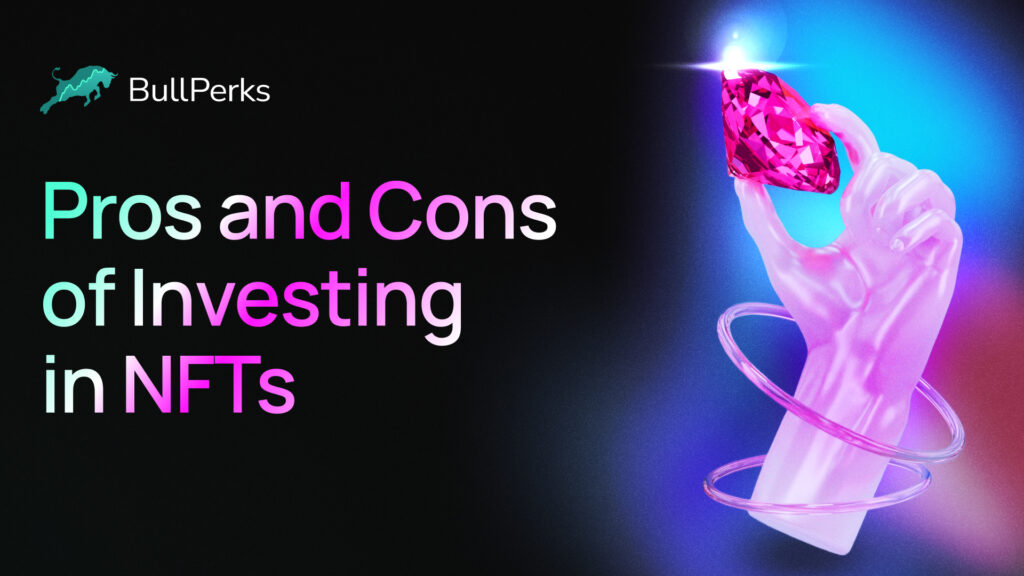
The Pros and Cons of Investing in NFTs
Pros
Greater Accessibility
NFTs are widely available, making it easy for buyers and sellers to trade digital assets across global marketplaces. Owners can store their NFTs in digital wallets or compatible platforms.
Strong Proof of Ownership
NFT ownership is permanently recorded on the blockchain, ensuring transparency and security. This verifiable proof of ownership enhances trust and reduces disputes.
Portfolio Diversification
Investing in NFTs adds variety to an investor’s digital asset portfolio, offering exposure to a unique and evolving market.
Seamless Transfers
Since NFTs exist in decentralized digital ecosystems, they can be transferred easily without intermediaries. This flexibility makes them valuable for future applications, such as digital identity management.
Cons
Risk of Scams and Fraud
The abundance of NFT marketplaces creates opportunities for scams. Counterfeit NFTs and double-selling schemes are common risks, leading to ownership disputes.
Lack of Legal Protections
Unlike traditional assets, NFTs lack regulatory oversight. Ownership rights can be unclear, allowing others to use or duplicate an NFT without legal repercussions.
Security Challenges
Many NFT platforms are self-managed, and errors in securing, transferring, or trading NFTs can result in losses. Technical vulnerabilities also pose risks.
Uncertain Value
An NFT’s worth depends on factors like rarity, cultural relevance, and association with influential figures. If these elements lose significance, the NFT’s value can decline rapidly.
The Bottom Line
NFTs offer exciting investment opportunities but also come with inherent risks. Before diving into the NFT market, investors should carefully evaluate both the advantages and potential pitfalls to determine whether the rewards outweigh the uncertainties.